

Why Replacing Missing Teeth Matters
It's tempting to leave a missing tooth alone — especially if it's a back tooth nobody sees. But missing teeth don't just affect your smile. They quietly change the structure of your mouth in ways that get harder to fix the longer you wait.
Here's what happens when missing teeth go unreplaced:
- Jawbone loss. Without a tooth root stimulating the bone, the jawbone starts to shrink within months.
- Neighboring teeth shift. Surrounding teeth drift into the empty space, throwing off your bite.
- Bite and chewing problems. An uneven bite can lead to jaw pain, headaches, and TMJ issues.
- Premature aging. Bone loss in the jaw can change facial structure and create a sunken look.
- Speech changes. Missing front teeth can affect pronunciation.
- Confidence loss. Most patients tell us this is what finally pushed them to act.
The good news: today's tooth replacement options are more natural-looking, comfortable, and long-lasting than ever — and there's a solution for every situation and budget.
Your 4 Main Tooth Replacement Options
Each option fits a different situation. Here's an honest look at how they compare — what they fix best, what to expect, and the trade-offs to know.
1. Dental Implants
Best for: 1 or a few missing teeth, healthy jawbone, long-term solution
Dental implants are widely considered the gold standard for tooth replacement. A titanium post is placed into the jawbone, where it fuses with the bone over a few months. A custom crown is then attached on top, creating a replacement tooth that looks, feels, and functions like a natural one.
Implants are the only tooth replacement option that preserves the jawbone — because the post acts like a natural tooth root and keeps the bone stimulated.
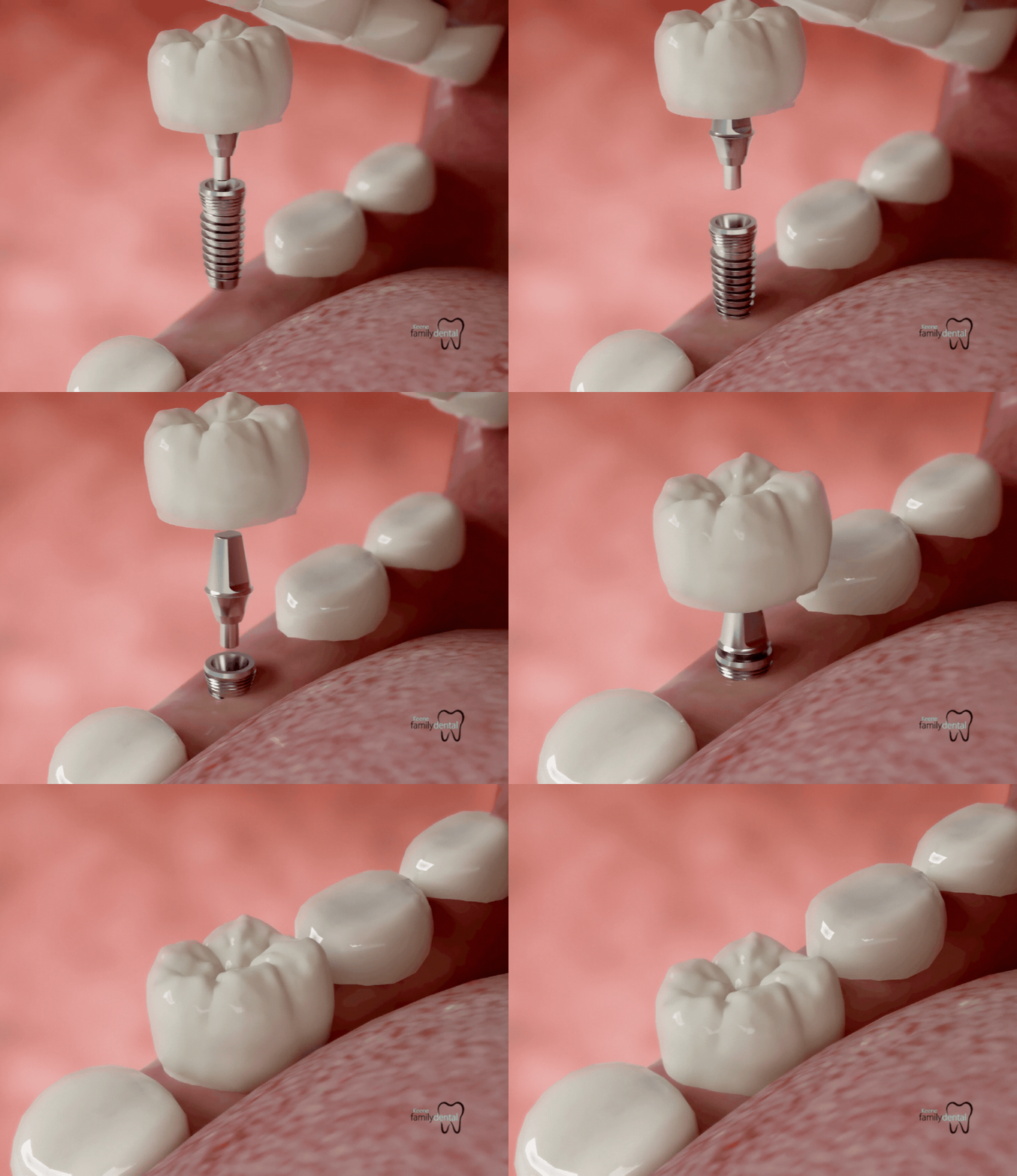
Implants are a great fit if: you're missing one or a few teeth, you have enough healthy jawbone (or are open to a bone graft), you want a permanent solution, and you'd rather invest once than replace something every 5–10 years.
Implants may not be right if: you have uncontrolled diabetes, significant bone loss without grafting, or you're not ready for a multi-step process.
Learn more about our implant dentistry →2. Dental Bridges
Best for: 1–3 missing teeth in a row, when implants aren't an option
A dental bridge replaces missing teeth by using the teeth on either side of the gap as anchors. The adjacent teeth get crowned, and a replacement tooth (or teeth) is suspended between them — "bridging" the gap.
Bridges are a good middle-ground option: faster than implants, more permanent than dentures, and no surgery required.
Bridges are a great fit if: you're missing 1–3 teeth in a row, the surrounding teeth are healthy enough to support crowns, you want a fixed solution without surgery, and you're working within a smaller budget.
Bridges may not be right if: the adjacent teeth are healthy and you'd rather not crown them, or if you want a solution that preserves jawbone.
3. Dentures (Partial or Full)
Best for: Multiple missing teeth, budget-conscious, faster timeline
Modern dentures aren't your grandparents' dentures. Today's dentures are custom-fit, natural-looking, and far more comfortable than the dentures of decades past.
Partial dentures replace a few missing teeth and clip onto your remaining natural teeth. Full dentures replace an entire arch (upper, lower, or both).
Dentures are a great fit if: you're missing most or all of your teeth, you want the most affordable option upfront, you need a faster timeline, or you're not a candidate for implants.
Dentures may not be right if: you want something that feels exactly like natural teeth, you don't want a removable appliance, or you want to prevent ongoing jawbone loss.
4. All-on-4 Implants
Best for: Full arch of missing teeth, want fixed teeth without individual implants for each
All-on-4 is a full-arch replacement that uses just four strategically placed implants to support an entire row of fixed teeth — upper, lower, or both. It's a game-changer for patients who would otherwise need full dentures.
Unlike traditional dentures, All-on-4 teeth are fixed in place — you don't remove them. They look, feel, and function like natural teeth, and many patients walk out with a temporary set the same day.
All-on-4 is a great fit if: you're missing most or all of your teeth in an arch, you don't want removable dentures, you want to preserve jawbone, and you're ready for a more involved process for a long-term result.
All-on-4 may not be right if: you have only a few missing teeth, severe bone loss without grafting, or you'd prefer a faster, less invasive option.
Which Option Is Right for You?
A quick decision guide based on the most common situations we see.

Tooth Replacement at Keene Family Dentistry
We offer the full range of tooth replacement options — under one roof, by a team that takes time to talk through what actually fits your life.
- Modern technology including iTero digital scanning and CEREC same-day crowns
- Honest treatment plans with clear pricing and no pressure
- Flexible financing through our patient financing options
- Gentle, judgment-free care — many of our patients haven't seen a dentist in years
- Convenient location serving Keene, Cleburne, Burleson, and Alvarado
Not sure which option fits your situation? Come in for a consultation and we'll talk through the pros and cons of each based on your teeth, your goals, and your budget.
Explore Restorative DentistryMissing Teeth FAQs
The most common questions we hear from patients considering tooth replacement.
What is the best option for replacing missing teeth? +
There's no single "best" option — it depends on how many teeth you're missing, your oral health, and your budget. Dental implants are widely considered the gold standard because they look and function most like natural teeth and preserve the jawbone, but they aren't right for every patient or every budget. A consultation with a dentist is the best way to identify the right fit.
How painful is getting a dental implant? +
Most patients say a dental implant procedure is far less uncomfortable than expected. The placement itself is done under local anesthesia (and sedation if you'd prefer it), so you shouldn't feel pain during the procedure. Mild soreness, swelling, and tenderness for a few days afterward is normal and is usually managed with over-the-counter pain relievers. Many of our patients are surprised at how smoothly recovery goes.
What disqualifies you from getting dental implants? +
The most common factors that may disqualify a patient from implants are: significant jawbone loss without the option of grafting, uncontrolled diabetes or other systemic conditions, heavy smoking, untreated gum disease, or certain medications that affect bone healing. Most of these are manageable — bone grafts can rebuild the jaw, gum disease can be treated first, and many medical conditions just need to be stabilized before implant surgery. A consultation tells us for sure.
Should a 70-year-old get a dental implant? +
Yes — age alone isn't a disqualifier for dental implants. What matters is overall health, jawbone density, and ability to heal. Many patients in their 70s, 80s, and beyond get implants successfully and enjoy them for the rest of their lives. We evaluate each patient individually based on health, not age.
How long does the implant process take? +
A standard dental implant process takes 3 to 6 months from start to finish. The implant is placed first, then needs time to fuse with the jawbone (osseointegration) — usually 3 to 4 months. The final crown is placed once healing is complete. All-on-4 procedures can sometimes provide functional teeth the same day with a temporary set, with the final fixed prosthetic placed months later.
How much do missing teeth replacements cost? +
Cost varies widely based on the option you choose, how many teeth need replacing, and whether procedures like bone grafting are needed. Dentures are typically the most affordable upfront, with bridges in the middle and implants requiring the highest initial investment — but implants often work out to less per year of use because they last so much longer. We'll provide a clear written estimate at your consultation and offer flexible financing through our patient financing options.
Are modern dentures uncomfortable? +
Today's dentures are dramatically more comfortable than dentures from decades past. They're custom-fit using digital scanning, lighter, and designed for a more natural feel. There's still an adjustment period for new wearers, but most patients adapt within a few weeks. If you've worn dentures before and hated them, implant-supported dentures or All-on-4 can be transformative.
Does insurance cover tooth replacement? +
Most dental insurance plans cover at least part of dentures and bridges since they're considered medically necessary restorations. Implant coverage varies — some plans cover the crown but not the implant itself, others cover a portion of everything. We verify your benefits before treatment and walk you through exactly what's covered and what's not.
Ready to Stop Hiding Your Smile?
Whether you're missing one tooth or several, our team will walk you through every option honestly — so you can make the call that fits your life. Patients from Keene, Cleburne, Burleson, and Alvarado are welcome.