
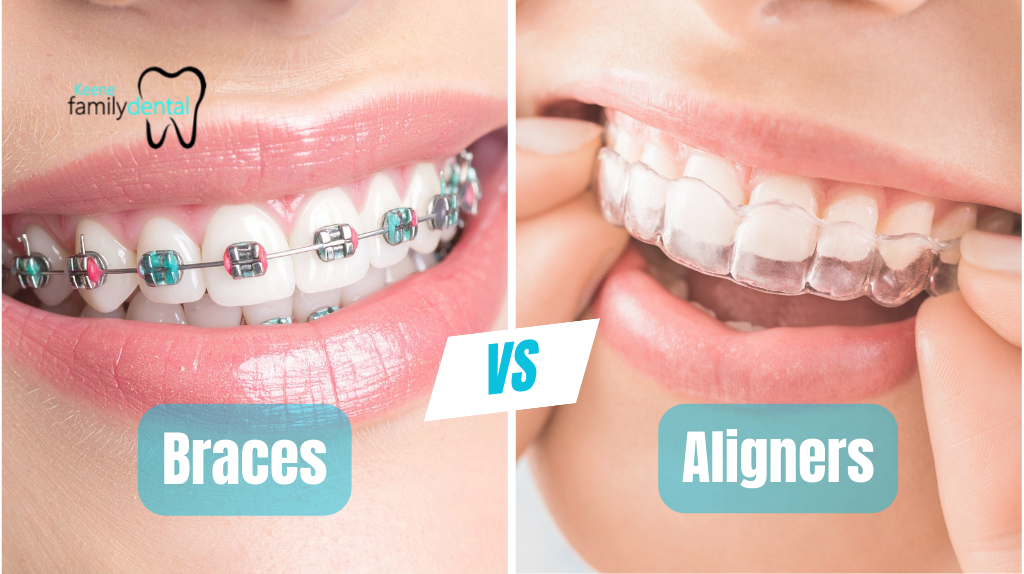
Invisalign vs Braces: Which Is Right for You?
Choosing between Invisalign and traditional braces is one of the most common questions patients ask when considering orthodontic treatment. Both options can straighten your teeth and improve your smile—but they work in very different ways.
At Keene Family Dentistry, we help patients find the right solution based on their lifestyle, goals, and dental needs. Here’s how Invisalign compares to braces so you can make a confident decision.
What’s the Difference Between Invisalign and Braces?
Both Invisalign and braces are designed to move teeth into proper alignment—but the approach is completely different.
Invisalign uses:
Clear, removable aligner trays
Digital treatment planning
Gradual tooth movement with each new set
Traditional braces use:
Metal or ceramic brackets
Wires and adjustments over time
Fixed appliances that stay on your teeth
Both are effective—but the experience is very different.

Appearance: Clear vs Metal
Both are effective—but the experience is very different.
Invisalign uses:
-Nearly invisible when worn
-Ideal for adults and teens who want a discreet option
-Great for work, social settings, and photos
Traditional braces use:
-More noticeable due to brackets and wires
-May impact confidence for some patients
If keeping your treatment subtle matters, Invisalign is the clear winner.
Comfort & Daily Convenience
Comfort and ease of use can make a big difference during treatment.
Invisalign:
-Smooth plastic trays (no sharp edges)
-Removable for eating and cleaning
-Easier brushing and flossing
Braces:
-Can cause irritation from brackets and wires
-Require adjustments and tightening
-More effort to clean around brackets
Invisalign offers a more flexible and comfortable experience overall.
Treatment Time & Effectiveness
Both options can deliver great results—but the timeline and cases they treat can differ.
Invisalign is ideal for:
-Mild to moderate alignment issues
-Spacing or crowding
-Patients who will wear aligners consistently
Braces may be better for:
-Complex bite issues
-Severe misalignment
-Cases requiring more precise control
Most Invisalign treatments take 6–18 months, depending on your case.
Cost Comparison
Many patients assume Invisalign is significantly more expensive—but that’s not always the case.
- Invisalign and braces are often comparable in cost
- Many insurance plans cover both options
- Flexible payment plans are typically available
Which Option Is Right for You?
The right choice comes down to your goals, lifestyle, and the complexity of your case.
If you want:
A discreet, nearly invisible solution
Flexibility in your daily routine
A comfortable, modern treatment option
Invisalign may be the perfect fit.
If your case is more complex, traditional braces may still be recommended.
The best way to know? A professional evaluation.
If you’re considering Invisalign in Keene, TX, our team can create a custom treatment plan designed just for you.
Ready to Transform Your Smile?
A straighter smile doesn’t just improve appearance—it boosts confidence and supports long-term dental health. At Keene Family Dentistry, we make it easy to explore your options and choose the treatment that works best for you.
Schedule your Invisalign consultation today and take the first step toward a healthier, more confident smile.
FAQs
Is Invisalign better than braces?
Invisalign is often preferred for its comfort and nearly invisible appearance, but braces may be better for complex alignment issues. The best choice depends on your specific needs.
How long does Invisalign take compared to braces?
Invisalign typically takes 6 to 18 months, while braces may take longer depending on the complexity of the case.
Can Invisalign fix the same problems as braces?
Invisalign can treat many alignment issues, including crowding and spacing, but severe cases may still require traditional braces.